

If you recently acquired a business and something about the numbers isn’t adding up, forensic accounting for a business acquisition is probably the service you didn’t know you needed. Due diligence looked at what the seller presented, but it didn’t necessarily verify whether what was presented was true. Those are two different things, and by the time you notice the difference, you’re already the owner.
That gap is where most post-acquisition financial problems live. They rarely show up in the deal itself. They surface in the months afterward, when reconciliations don’t tie out, vendor balances contradict the seller’s schedules, and you start to wonder how much of what you inherited was ever accurate in the first place.
What You’ll Learn
- Why books that looked clean during due diligence can still contain serious errors or misrepresentations after closing
- What forensic accounting for a business acquisition involves and how it differs from a standard bookkeeping review
- The red flags that suggest the records you inherited may not reflect the true state of the business
- What happens after a forensic investigation and how to rebuild from an accurate financial baseline
- Why delaying a post-acquisition financial review increases both the cost and the risk
What Do “Clean Books” at Closing Actually Mean?
Clean books at closing usually mean two things: the documents were organized, and the numbers appeared internally consistent. That’s about all it guarantees.
Clean books at closing mean the documents were organized and the numbers looked consistent. They don’t mean the numbers were right.
Due diligence is a review of what the seller hands over. A good process will test some of those numbers against source documents, but it’s rarely exhaustive, and sellers know what’s likely to be reviewed. That isn’t always fraud. Sometimes it’s years of sloppy bookkeeping that got tidied up right before the sale. The SBA’s guidance on buying an existing business recommends a thorough, objective review of financial statements and tax returns before you buy, but even a careful buyer can only review what they’re shown.
Either way, you own the result now. A proper forensic accounting investigation is what tells you whether the starting position you were handed reflects reality.
What Does Forensic Accounting for a Business Acquisition Actually Involve?
Forensic accounting for a business acquisition is an investigation designed to establish whether the acquired company’s financial records are accurate, complete, and consistent with what actually happened in the business. It’s a very different exercise from a bookkeeping cleanup or an annual audit.
Forensic accounting after an acquisition isn’t about assigning blame. It’s about establishing financial ground truth, so the new owner can make decisions based on what the business actually is rather than what it appeared to be at closing.
Here’s what a forensic accountant is doing during the review:
- Tracing transactions back to source documents such as invoices, contracts, and bank statements instead of accepting ledger entries at face value
- Comparing management accounts against bank activity to find unrecorded liabilities or overstated revenue
- Reviewing the chart of accounts for unusual categories, catch-all accounts, or reclassifications made close to the sale date
- Examining related-party transactions that may have inflated results or hidden obligations
- Reconciling payroll records against reported headcount and payroll tax filings
- Testing accounts payable and receivable aging against actual payment patterns
A standard bookkeeping cleanup, by contrast, reorganizes and corrects existing records without asking whether those records were ever accurate to begin with.
A bookkeeping cleanup tidies up how historical records are presented, while a forensic review establishes whether those records are true. For someone who has just bought a company, those are two very different outcomes.
How Do You Know If Something Is Wrong With the Books You Inherited?
Most owners don’t walk in on day one and find a smoking gun. The signs are usually quieter than that. If you’re running through a mental list of bookkeeping errors after your business purchase and can’t decide whether they matter, these are the patterns worth taking seriously:
- Vendor balances that don’t match what suppliers say you owe
- Accounts payable that aged unusually in the months before the sale and then normalized right after
- Payroll records that don’t reconcile with headcount, payroll tax filings, or the org chart you inherited
- Bank and book balances that drift apart with no explanation
- Unusual journal entries dated in the 60 to 90 days before closing
- Undisclosed liabilities sitting in accrual accounts nobody walked you through
- Revenue that was recognized aggressively or on terms different from the contracts you now hold
- Missing source documents for material transactions
Any one of these on its own might be an honest bookkeeping mistake. Two or three together form a pattern, and a pattern is what calls for a proper financial record investigation rather than a routine cleanup.
Picture a buyer who takes over a profitable service company and, three months in, notices that suppliers keep calling about invoices that never appeared on the payables list handed over at closing. Each call seems minor until someone adds them up and realizes the seller’s payables were understated by a meaningful amount, which means the profit the purchase price was based on was overstated too. That’s exactly the kind of quiet discrepancy a forensic review is designed to surface early, while the purchase agreement still gives the buyer options.
These patterns show up in every state and industry, although construction and manufacturing acquisitions tend to carry more inherited issues that only surface once the new owner starts operating. State-level exposure, such as sales tax obligations or unpaid payroll taxes, can compound the federal picture, so a proper review looks at both.
What Happens After a Forensic Accounting Investigation?
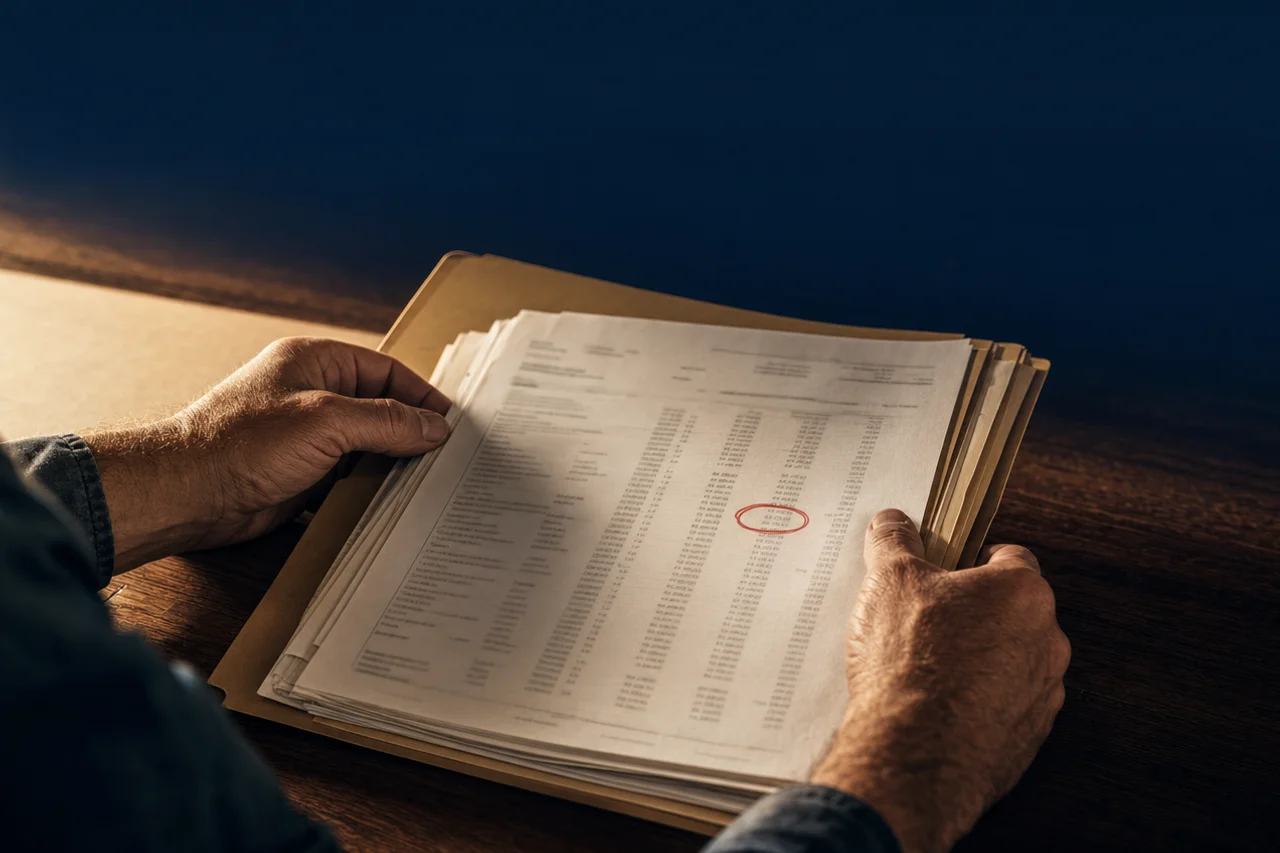
The output of a post-acquisition financial review is a findings report. It identifies what was discovered, where the discrepancies sit, and what they mean financially. From there, the work usually follows one of three tracks:
| Finding | Typical Next Step | Who Leads |
|---|---|---|
| Bookkeeping errors with no evidence of misrepresentation | A full inherited books cleanup and rebuild from a verified baseline | Your accounting firm |
| Material misrepresentation with documented evidence | Legal review of the purchase agreement and any potential recovery | Your attorney, supported by the forensic report |
| Undisclosed tax exposure or regulatory issues | Amended filings, voluntary disclosure, or other remediation with the IRS or state | Your tax CPA or tax counsel, supported by the forensic findings |
Whichever track applies, the findings report gives you something you didn’t have before, which is a verified starting point. From there, outsourced accounting services can rebuild the financial function on records you can actually trust, instead of layering new activity on top of a foundation nobody verified.
Why Does Waiting Make This More Expensive?
Every month you operate on unverified numbers, the cost of eventually verifying them goes up. The ACFE’s Occupational Fraud 2026: A Report to the Nations found that a typical fraud scheme runs for about 12 months before it’s discovered, and the losses grow the longer it goes unnoticed. Here’s why waiting costs you:
- Lender relationships: The first time a bank asks for financials that don’t reconcile, your credibility takes a hit that’s hard to rebuild.
- Investor and partner reporting: If you brought in capital to fund the acquisition, you owe those partners accurate reporting from day one.
- Tax exposure: Unreported liabilities, misclassified income, and missed state obligations keep growing as penalties and interest accrue.
- Decision quality: Every hiring, pricing, and investment decision made from unverified numbers carries risk you can’t see.
- Time limits on recovery: If the seller misrepresented material facts, the window to act under your purchase agreement and state law doesn’t stay open forever.
Bringing real advisory and financial analysis into the business early means your year-one decisions are based on what the business actually is, not what it looked like on the closing statement. In most cases, the cost of an investigation is far less than the cost of another six months of operating blind.
Key Takeaways
- Clean-looking books at closing aren’t the same as accurate books.
- Forensic accounting for a business acquisition establishes financial ground truth, while a cleanup only tidies the presentation.
- Patterns of discrepancies matter more than isolated errors when deciding whether an investigation is warranted.
- The output of an investigation is a verified baseline you can rebuild from.
- Waiting increases cost, tax exposure, and the risk of decisions made from numbers you can’t verify.
Questions Business Owners Ask After Acquiring a Company
Do I need forensic accounting if the business I bought passed due diligence?
Due diligence reviews what the seller presents, while a forensic review investigates whether what was presented is accurate. Many post-acquisition issues only come to light after the new owner takes operational control and starts reconciling the records against reality.
What’s the difference between a bookkeeping cleanup and a forensic accounting investigation?
A bookkeeping cleanup organizes and corrects existing records. A forensic investigation is designed to establish whether those records are truthful, complete, and consistent with what actually happened, so the starting question and the process are both different.
How long does a forensic accounting review of an acquired business take?
It depends on the size of the business and the condition of its records. A focused review of a smaller company can often be completed in a matter of weeks, while businesses with multiple entities, complex payroll, or incomplete documentation take longer.
What are the most common problems found in post-acquisition forensic reviews?
The most common findings include unrecorded liabilities, accounts payable that were manipulated around the sale date, payroll discrepancies, undisclosed related-party transactions, and revenue recognition errors that made the business look more profitable before the sale.
Can I take legal action if a forensic review shows the seller misrepresented the financials?
That depends on the findings and the terms of your purchase agreement. A forensic accountant can produce documentation that supports legal proceedings, but whether legal action makes sense is a question for your attorney. The forensic report provides the financial evidence, and what happens next is a legal and commercial decision.
What happens after a forensic accounting investigation is complete?
The investigation produces a findings report that identifies the discrepancies, their likely source, and their financial impact. The owner then typically works with an accounting firm to clean up the records, establish a verified baseline, and rebuild the financial function on accurate foundations.
Ready to Know What You Actually Bought?
You closed the deal and you own the business, so the question now is whether you have an accurate picture of it. If the numbers you inherited don’t add up, or you’ve been operating with a quiet sense that something is off, that’s worth a conversation.
Book a free 30-minute discovery call with Michelle. There’s no pressure and no commitment, just a direct conversation about what you’re seeing and what a proper review would involve.
About the author: Michelle Ahrens is the founder of Hugh Ledger Accounting. She has more than 27 years of accounting and finance experience across construction, real estate development, and manufacturing, including forensic accounting work on financial investigations and inherited books.
This article is provided for informational and educational purposes only and does not constitute formal tax, legal, or accounting advice. Every business acquisition is different, so please consult a qualified professional before acting on the information above.